When we look at a 3-D character, a fantasy creature or a realistic environment in a video game or movie, we don't pause to think about what makes those surfaces so convincing: porous skin, rusty metal, lived-in textiles, weather-scratched stone-these are details that look real.
But behind every surface is an artist who works in detail to transform a flat pattern into something that breathes, lives and communicates: the Texture Artist.
Who is the Texture Artist
The Texture Artist is the specialist who is responsible for applying textures, materials, and surface details to 3D models. He or she works side by side with modelers, concept artists, and lighting artists to ensure that each object, character, or environment has visual credibility and a strong aesthetic identity.
His goal? To give visual depth to every surface, transforming a neutral mesh into something that tells a compelling story.
What does a Texture Artist do
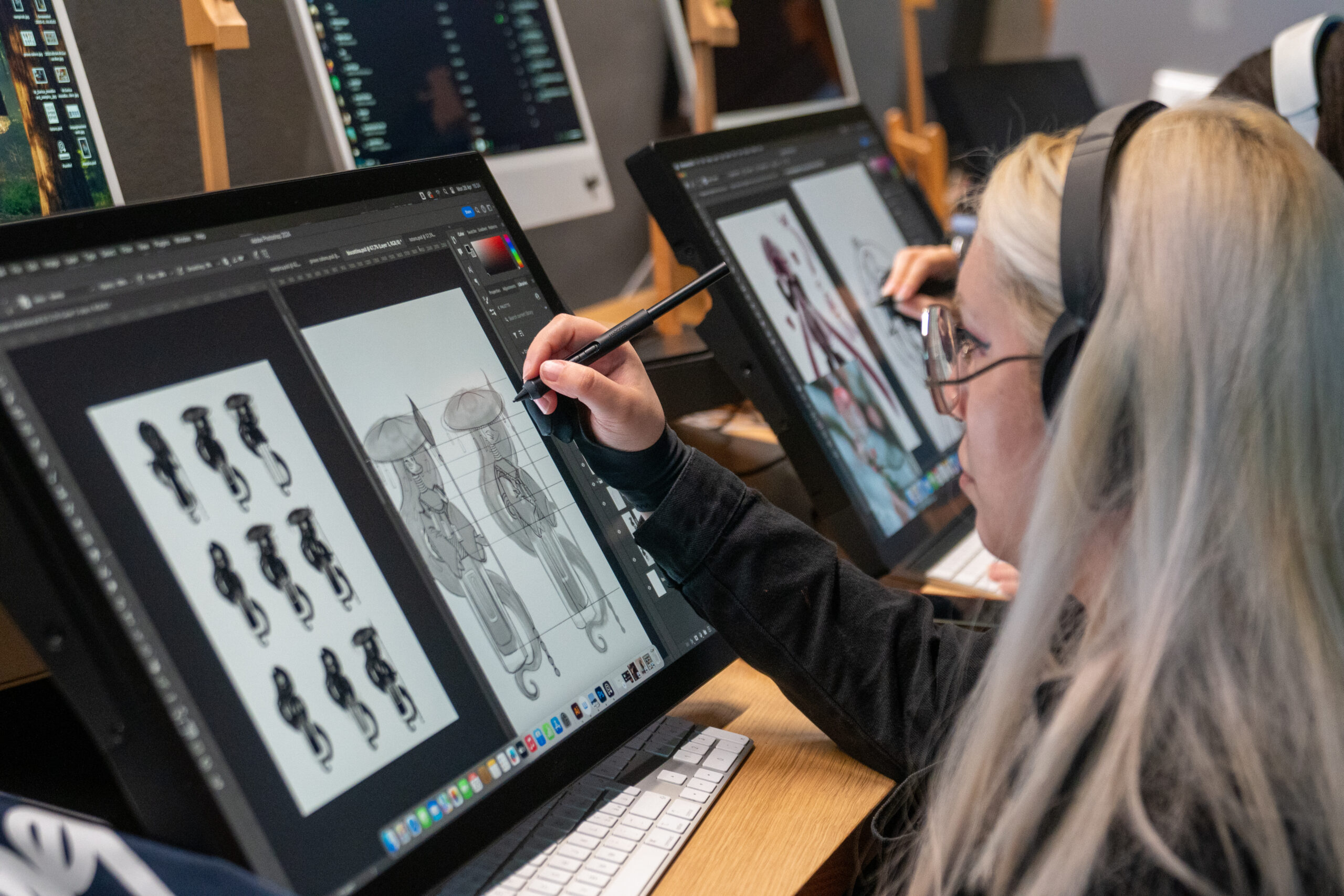
The Texture Artist's work begins after modeling and goes into the heart of visual production. Using software such as Substance Painter, Photoshop or Quixel, this artist:
- Creates realistic or stylized textures (leather, wood, fabric, metal, stone)
- Hand-paints details (such as scratches, stains, wear, wrinkles or porosity)
- works with UV mapping to correctly map textures to models
- handles PBR maps (albedo, roughness, metallic, normal map...).
- Collaborates with shader artists and lighting artists to verify the behavior of materials under stage lights
Basically, it is the professional who gives visual life to the model, making it believable, consistent and ready to be animated, lit or rendered.
Where a Texture Artist Works
The Texture Artist finds use in many areas of digital production:
- Game Development (AAA game studios, indie studios, mobile games, game outsourcing studios)
- Film, Animation and VFX (3D animation studios such as Pixar, DreamWorks, Illumination, VFX studios for live-action such as Framestore and DNEG, film productions)
- Advertising, fashion and design (high-end commercials as in automotive, beauty and fashion, visual storytelling for luxury brands, renderings for e-commerce and advertising)
- Virtual, augmented and interactive reality (VR/AR experiences, digital exhibitions, art and museum installations, simulations for architecture and education)
- Industrial design and prototyping(concept and product design, automotive, jewelry and accessories, eyewear, watchmaking, fashion)
The skills of the Texture Artist
To become a Texture Artist requires both artistic sensitivity and technical precision. Core skills include:
- knowledge of major texturing software
- notions of color theory and material rendering
- familiarity with PBR workflow and UV mapping
- Ability to read and interpret concept art
- An eye for detail, consistency, and visual storytelling
The Italian panorama
Even in Italy, the demand for Texture Artists is growing in animation, visual effects, and video game studios. Realities such as Rainbow, Nema FX, Ibrido Studio, Al One, and many others are increasingly involved in world-class productions.
And many Italian professionals, trained at schools like BigRock, are bringing their signatures to global projects, from Netflix to Ubisoft to international film productions.
How to Become a Texture Artist
You don't have to start out as an expert: all you need is a willingness to observe, attention to detail and a passion for surfaces. At BigRock's Master's in Computer Graphics, for example, you learn from the ground up to:
- use professional texturing software
- analyze real references and materials
- Create realistic or stylized textures for characters, environments, and objects
- integrate your work into 3D production workflows
Is this the right job for you?
If you are a person who notices details, if you love to draw, observe and experiment with styles and materials... then becoming a Texture Artist could be your path.
With the right training and a lot of curiosity, you could become the artist who gives character, history and depth to every 3D model.