There are artists who manage to transcend the centuries because they speak a universal language.
Antonio Canova is one such artist. His works, sculpted between the late 18th and early 19th centuries, continue to amaze today with their extraordinary ability to represent the human body with balance, harmony, and a profound knowledge of anatomy.
When observing a sculpture by Canova, one almost has the impression that the marble breathes: muscles, postures, tensions, and relaxations are rendered with such naturalness that one forgets the hardness of the material. Every detail of the human body is the result of study, observation, and extraordinary artistic sensitivity. Canova has the superpower of transforming anatomy into visual poetry, captivating you with it.
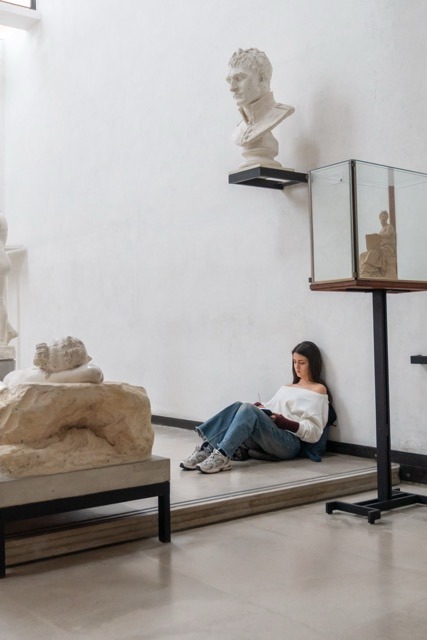
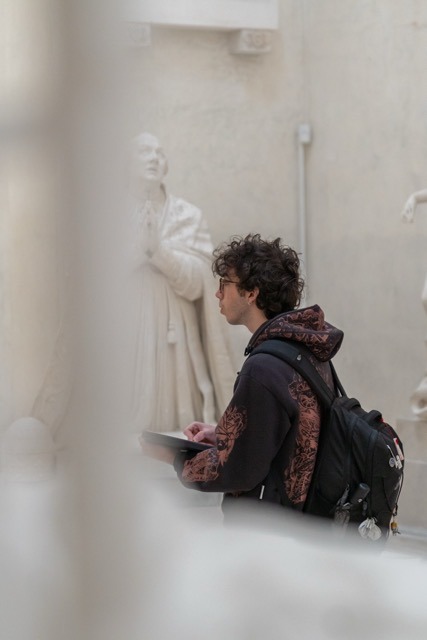
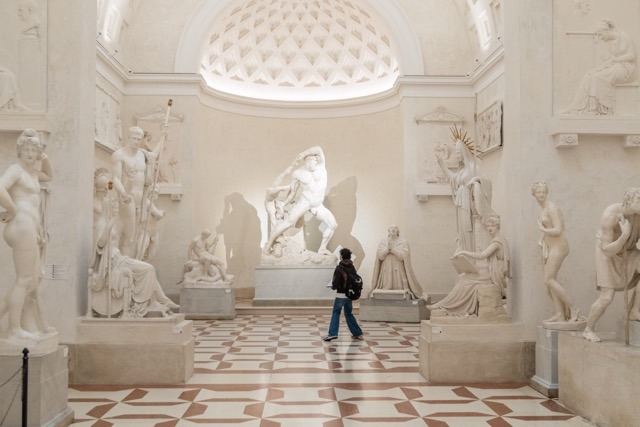
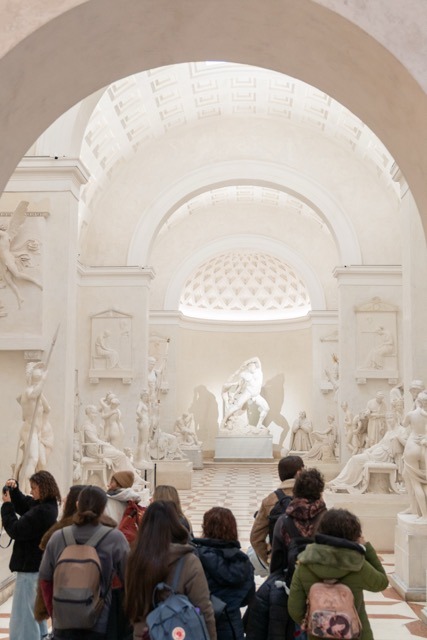
It was precisely to understand this mastery that we visited, together with the students of the Master's Degree in Concept Art, the Gipsoteca di Possagno, a symbolic place and the beating heart of Canova's legacy. Here, the plaster models of his most famous works are preserved: an essential stop for anyone studying art, drawing, and visual design.
One morning in late January, with the warm sun shining through the glass ceiling and softly illuminating the statues. The plaster cast gallery was empty, offering three hours of almost sacred silence in which to directly confront volumes, proportions, and postures. It was a valuable experience, because drawing from life forces you to really look: to understand how one muscle connects to another, how the weight of the body is distributed in space, how the slightest variation in inclination can convey grace, tension, or movement.
The anatomy lessons studied at school have thus found concrete and powerful confirmation. Canova therefore becomes a true "master" even for today's concept artists, demonstrating that at the heart of every great work there is always a profound knowledge of the human figure.
And perhaps this is precisely the most powerful message that the students took away with them when they returned from Possagno: in order to imagine fantastical worlds and characters, you first need to learn to observe, understand, and respect the human body, just as Antonio Canova did, with absolute dedication and love for form.