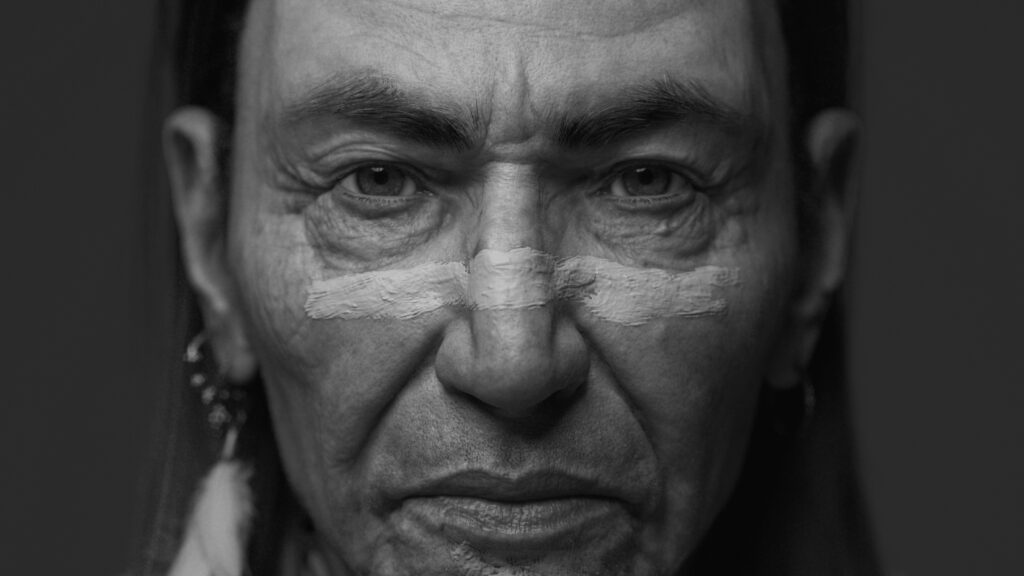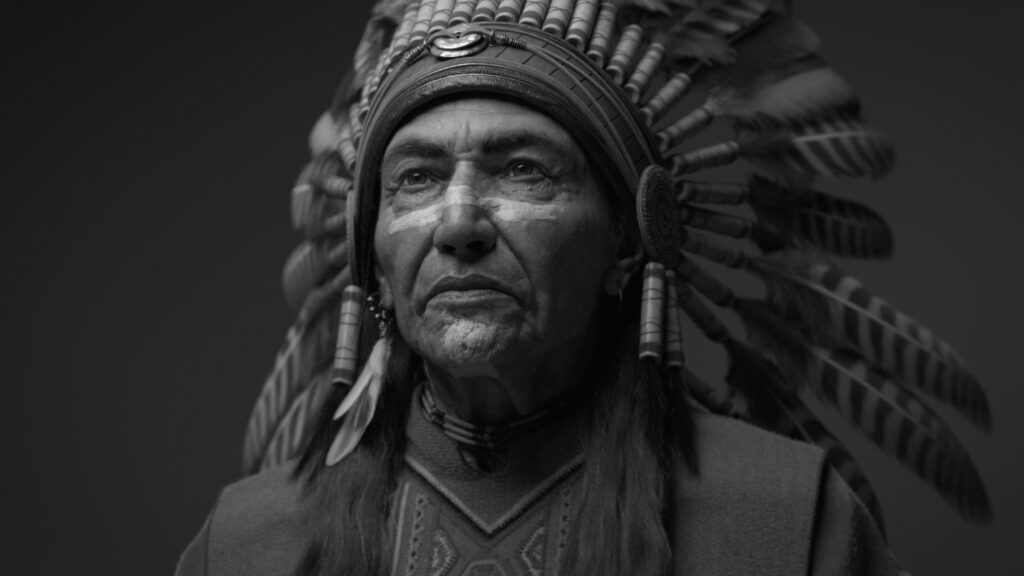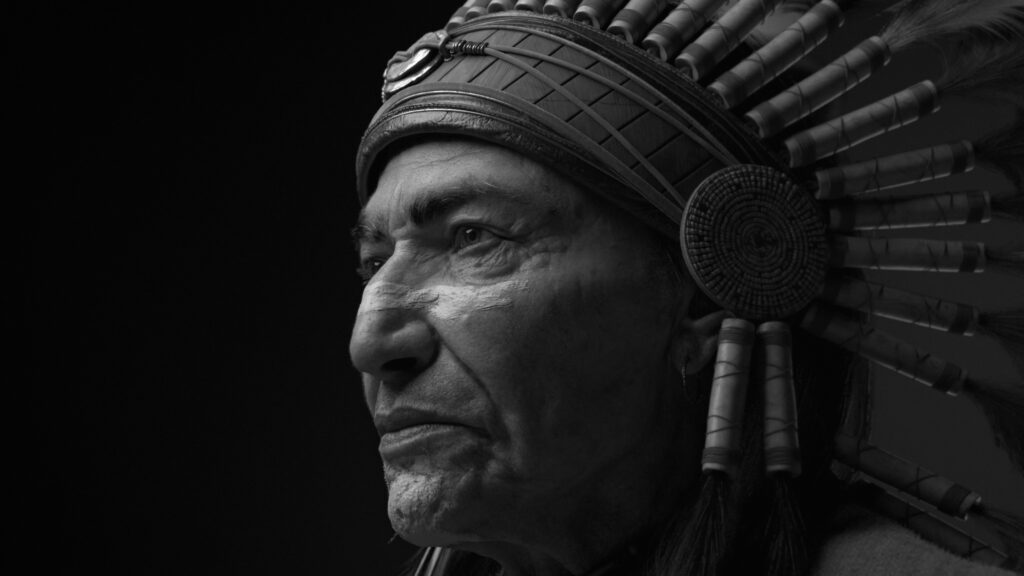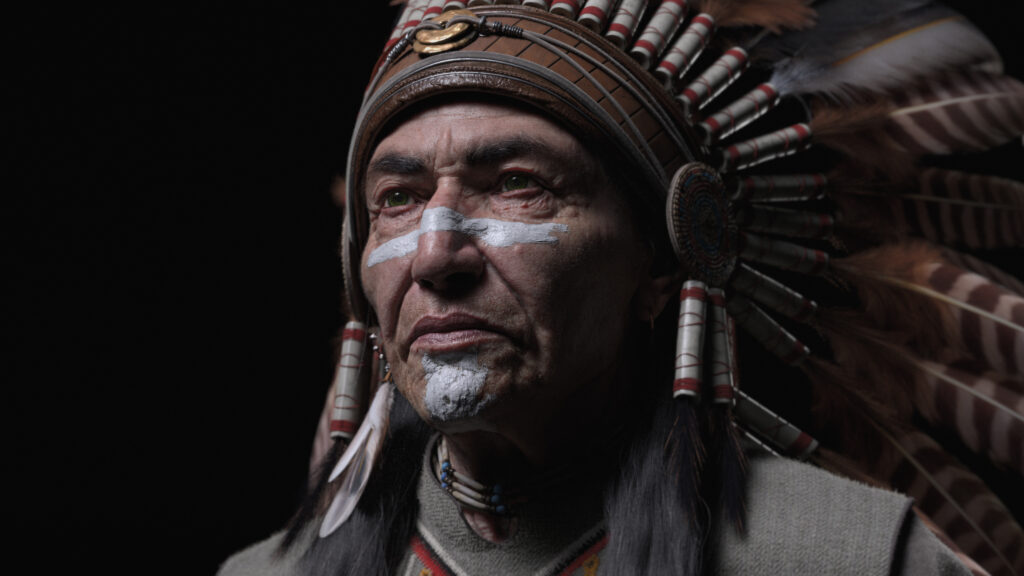
In the landscape of contemporary computer graphics, personal projects are often the true testing ground for a 3D artist. It is from this spirit of experimentation and growth that Photorealistic Portrait of a Native American, the latest personal work by Giacomo Cervi, a freelance 3D artist at Gate1 Studio, was born.
Before working on major productions for clients such as Formula 1, Ferrari, King's Cup, Asian Winter Games, Alfa Romeo, Ringo, Eurovision, Huawei, and many others, Giacomo built the foundations of his path in the classrooms of BigRock, where he learned the technical and artistic foundations of the craft.
Motivated by a passion for character art and a desire to confront a workflow belonging to the world of VFX, he decided to create a character completely from scratch.
Telling a story through a face
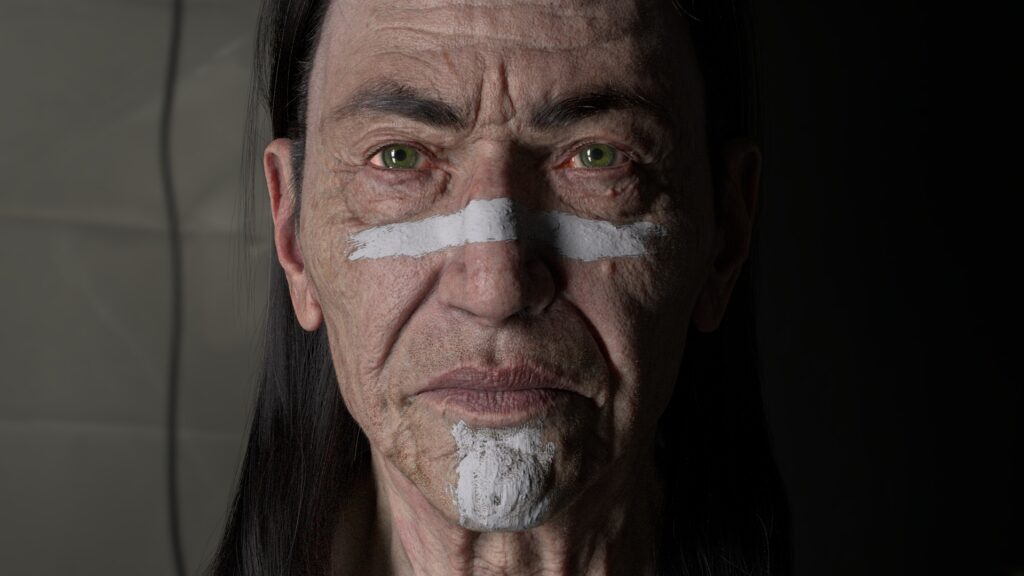
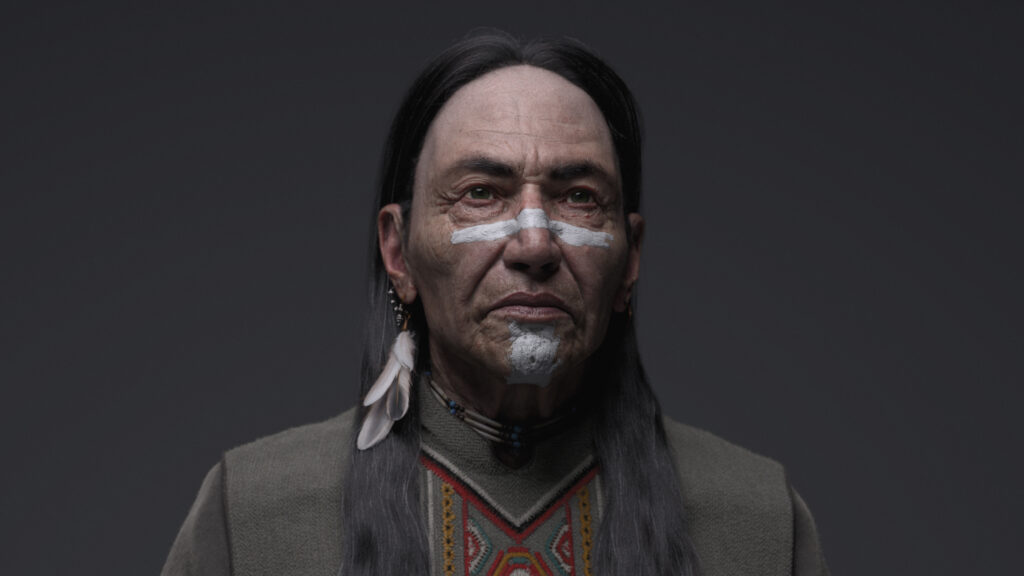
The theme chosen was Native American, with the intention of depicting a tribal leader whose face could convey history, culture and spirituality. Every detail of the character was designed to support this narrative, highlighting not only technical skills but also a keen artistic sensibility.
Modeling Phase
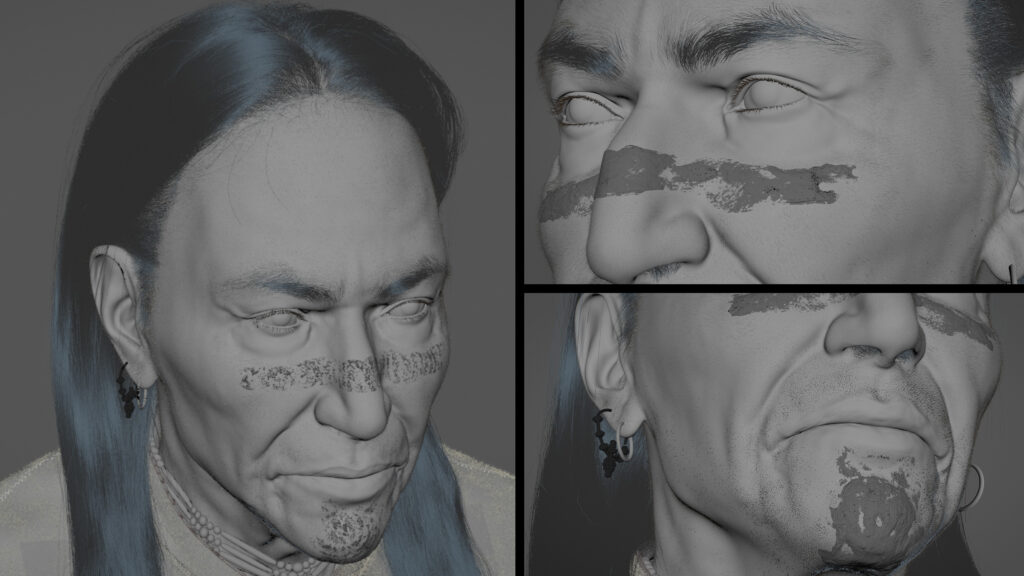
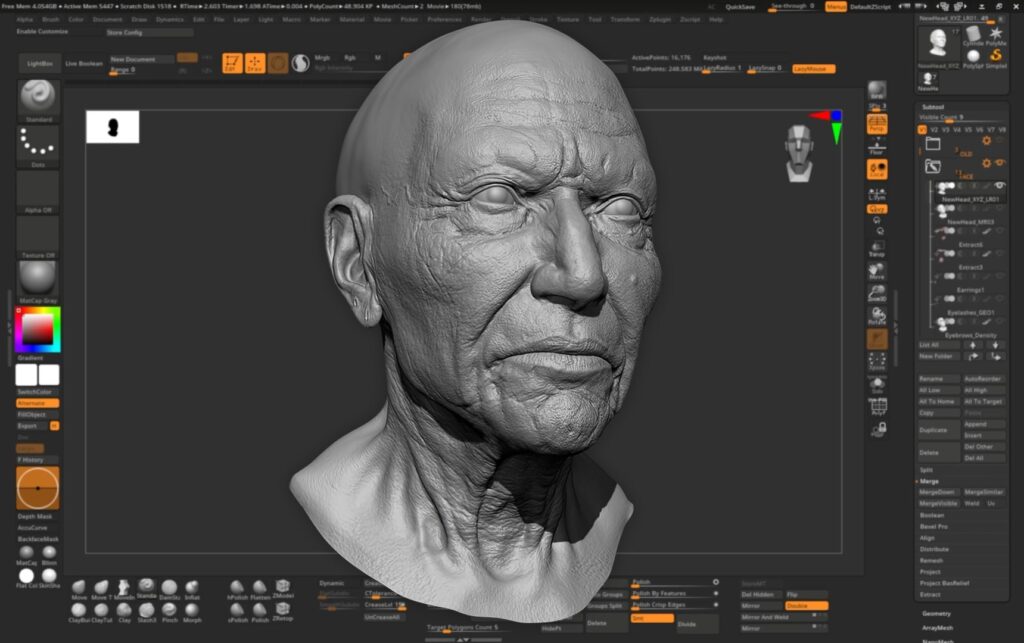
The project takes shape in ZBrush, where James manually sculpted the entire face, progressively defining primary shapes, secondary shapes, and ultra-high resolution details using HD Geometry.
To make the skin look even more realistic, he integrated Texturing XYZ's V-Face maps, which add precision displacement and allow him to capture key elements such as wrinkles, pores, micro-asymmetries and signs of aging.
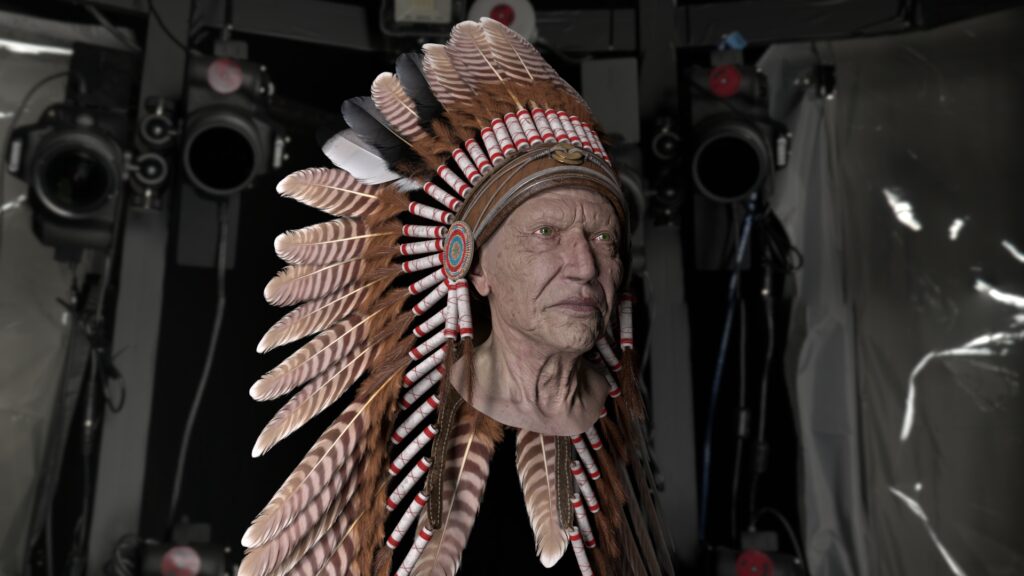
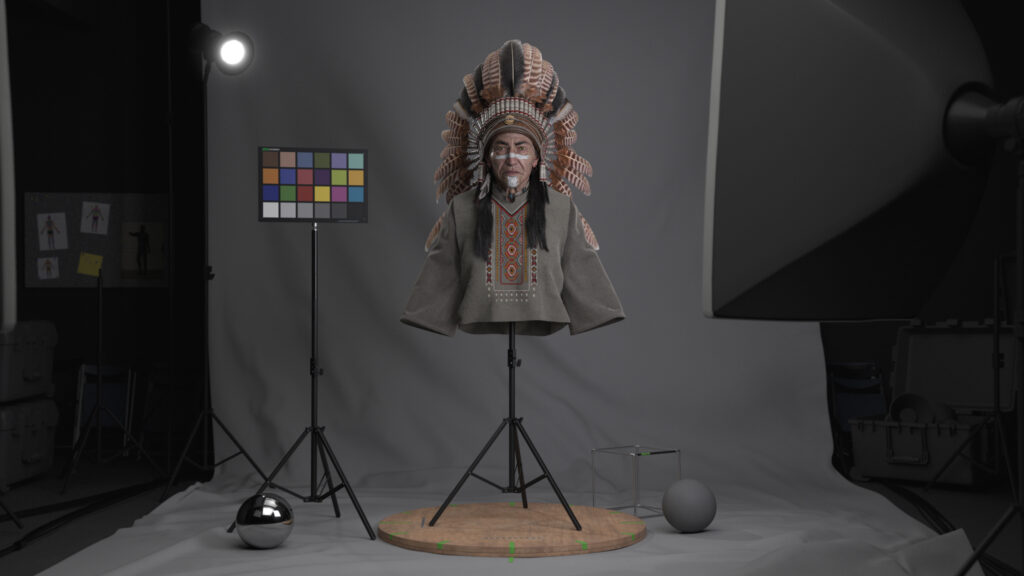
The groom was created with XGen Interactive, while the headdress came at a later stage: the feathers were created using hair cards, a technique more common in the video game industry than in VFX. For their realistic rendering, maps were generated from real textures using Substance 3D Sampler, and then hand-painted details were added.
Texturing Phase
The entire texturing process was done in Substance 3D Painter, starting with the diffuse map from the Texturing XYZ package and then working with custom masks and manual brush strokes to add depth, variation, and realism to the skin.
For the embroideries on the dresses, Giacomo used Substance 3D Sampler's automatic embroidery generation system from custom patterns.
The most challenging step, however, was defining the skin shader in Arnold, which required many iterations to achieve a credible balance between subsurface scattering and reflections.
Lighting, Rendering & Post-Production
A character, no matter how detailed, cannot really "work" without good lighting. Understanding the behavior of lighting, materials, and the construction of a realistic set is critical.
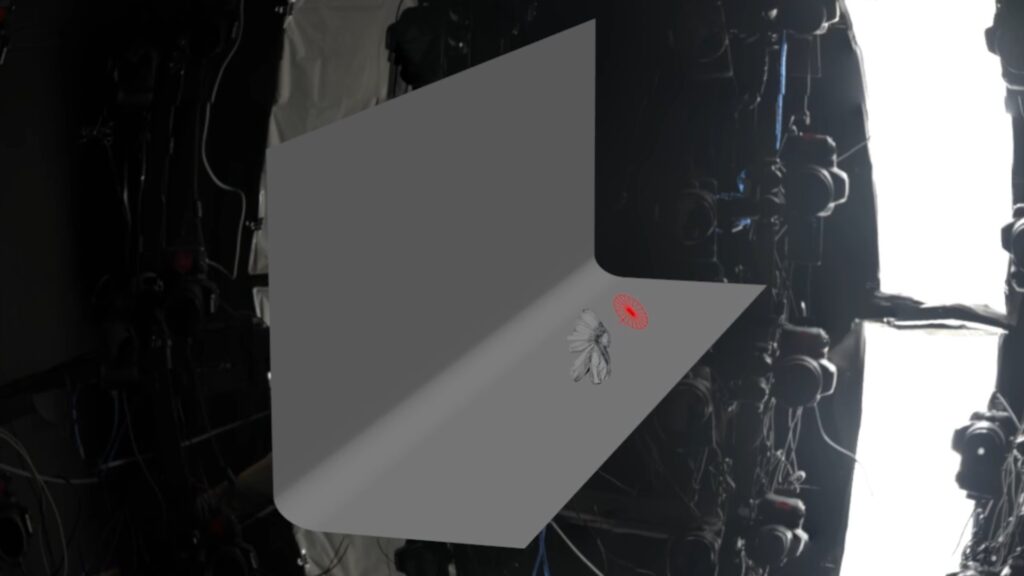
The final renders were created in Maya with Arnold, developing a custom lighting rig to enhance the details of the model. Using Maya's Camera Sequencer, James sped up the process of rendering multiple shots in a single pass.
The render passes exported by Arnold were then processed in After Effects for final compositing: color correction, bloom, contrast, grain, and all those interventions necessary to achieve a cinematic result.
Technique, aesthetics and storytelling
Day-to-day work at Gate1, where they are constantly tackling LookDev and product rendering projects that require flawless lighting, has certainly helped hone Giacomo's skills, and in this project he was able to apply them in a personal and experimental way.
Photorealistic Portrait of a Native American demonstrates how crucial storytelling is even in a static image: accessories, materials, textures, and design choices become powerful tools to give soul to a character.
Work that not only shows technical skills, but more importantly a willingness to evolve, experiment and learn.
Don't miss the upcoming projects and keep following our blog!